Potato pizza turns simple pantry ingredients into a cozy, indulgent easy vegetarian pizza dinner with a crisp golden crust, creamy garlic sauce, tender Yukon Gold potatoes, melted cheese, and fragrant rosemary in every bite. This homemade potato pizza recipe reminds me of rustic family pizza nights, when the kitchen smells like roasted garlic, bubbling mozzarella, and fresh herbs. Each slice looks beautifully golden, with creamy white sauce peeking under soft potatoes and lightly browned cheese. If you love crispy potato pizza, rosemary potato pizza, or a comforting white sauce potato pizza, this one feels hearty without needing meat. Try it tonight, save it for your next pizza night, and share it with another potato lover.
Quick Overview
Homemade potato pizza is a baked vegetarian pizza made with pizza dough, parboiled Yukon Gold potatoes, creamy garlic sauce, mozzarella, sharp cheddar, Parmesan, rosemary, and fresh herbs. The key technique is parboiling the potato cubes before baking so they stay tender inside and finish perfectly on the pizza. Bake at 475°F for 13 to 17 minutes until the crust is golden and the cheese is melted, glossy, and lightly browned.
Key Details for Success
Pan Size: 12-inch pizza pan or baking sheet
Oven Temperature: 475°F
Prep Time: 25 minutes
Cook Time: 17 minutes
Total Time: 42 minutes
Texture Goal: Crisp golden crust, creamy garlic sauce, tender potatoes, and bubbly melted cheese
Main Technique: Parboil the potatoes, dry them well, then bake on a hot surface
Biggest Mistake to Avoid: Adding wet or fully cooked potatoes, which can make the crust soggy
Best Make-Ahead Tip: Parboil and season the potatoes ahead, then assemble before baking
Doneness Cue: The crust should be golden, the potatoes tender, and the cheese glossy with browned spots
Cooling or Resting Cue: Let the pizza rest for 5 minutes before slicing so the cheese settles
Why This Homemade Potato Pizza Works Every Time
The potatoes are parboiled before baking, which gives them a creamy center and prevents undercooked potato pieces on top of the pizza.
The creamy garlic sauce adds moisture and flavor without making the crust greasy. It also helps the potato cubes and cheese taste richer in every bite.
The cheese blend works because mozzarella melts smoothly, sharp cheddar adds bold flavor, and Parmesan gives a salty, savory finish.
Fresh rosemary brings a fragrant, woodsy note that keeps the pizza from tasting too heavy. In addition, garlic powder seasons the potatoes evenly.
The high oven temperature helps the crust bake quickly and turn golden while the cheese becomes bubbly and glossy.
The pizza is flexible enough for weeknight dinners, brunch, game day, or casual entertaining. It looks impressive, but the method stays simple.
This easy homemade pizza with potatoes is vegetarian, comforting, and satisfying enough to serve as a main course.
Ingredients for Homemade Potato Pizza
For the Pizza
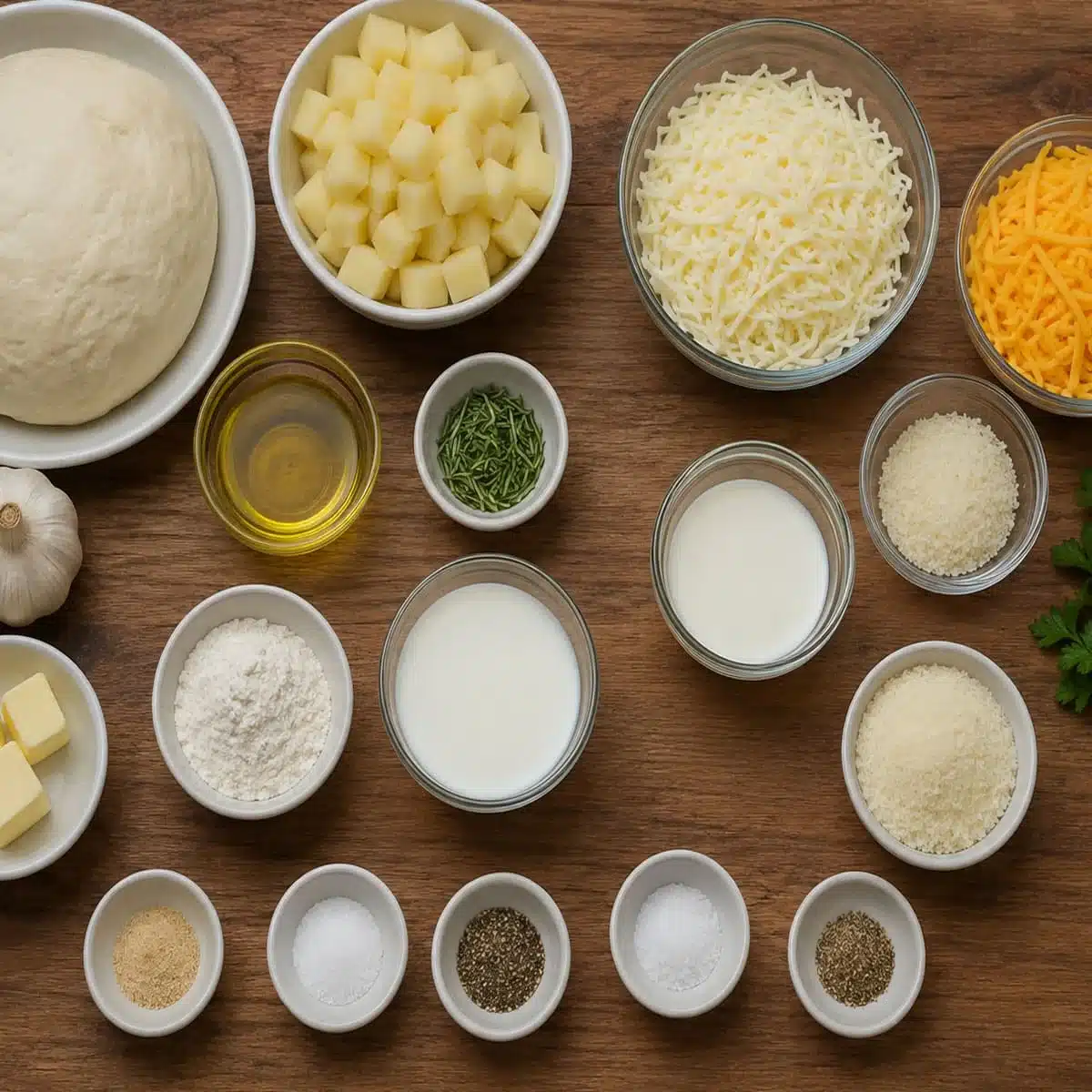
1 pound refrigerated or homemade pizza dough
2 medium Yukon Gold potatoes, peeled and cut into small cubes
1 tablespoon olive oil
1 teaspoon finely chopped fresh rosemary
½ teaspoon garlic powder
½ teaspoon salt
¼ teaspoon freshly ground black pepper
1½ cups shredded mozzarella cheese
¾ cup shredded sharp cheddar cheese
2 tablespoons grated Parmesan cheese
1 tablespoon chopped fresh parsley or green onion
For the Creamy Garlic Sauce
1 tablespoon unsalted butter
2 garlic cloves, finely minced
1 tablespoon all-purpose flour
¾ cup whole milk
¼ cup heavy cream
¼ teaspoon salt
⅛ teaspoon black pepper
¼ cup grated Parmesan cheese
Ingredient Breakdown
Pizza dough creates the base for this Homemade potato pizza. Use 1 pound of refrigerated or homemade dough, and let it sit at room temperature briefly if it feels too tight to stretch.
Yukon Gold potatoes are ideal because they become creamy and tender while still holding their shape. Two medium potatoes should be cut into small cubes so they finish cooking evenly in the oven.
Olive oil helps coat the potatoes and encourages lightly crisp edges. It also carries the rosemary, garlic powder, salt, and pepper across the potato pieces.
Fresh rosemary gives the pizza its signature aroma. Use finely chopped rosemary so the flavor spreads evenly instead of landing in strong, woody bites.
Garlic powder seasons the potatoes without adding moisture. This helps the potato topping stay flavorful while still browning properly.
Mozzarella cheese gives the pizza its classic melted, stretchy texture. Low-moisture mozzarella works best because it melts well and helps protect the crust from excess moisture.
Sharp cheddar adds a bold, savory flavor that pairs beautifully with potatoes. In addition, it gives the pizza a deeper golden color.
Parmesan cheese adds salty richness in both the sauce and the topping. It gives the pizza a more complete, restaurant-style flavor.
Parsley or green onion adds freshness after baking. This final garnish brightens the rich cheese and creamy sauce.
Butter starts the creamy garlic sauce with a smooth base. Once melted, it helps soften the minced garlic and blend with the flour.
Minced garlic gives the sauce its savory flavor. Cook it briefly so it becomes fragrant without turning bitter.
All-purpose flour thickens the sauce. One tablespoon is enough to create a spreadable base without making it heavy.
Whole milk and heavy cream make the sauce silky, rich, and smooth. The sauce should be creamy enough to spread but not so thick that it pulls at the dough.
Salt and black pepper season the sauce simply. Since the cheeses add salt too, the seasoning stays balanced.
Smart Substitutions
For a gluten-free version, use your favorite gluten-free pizza dough and a gluten-free flour blend in the garlic sauce.
For a lighter version, use less cheddar and add extra herbs for flavor.
For a budget version, use refrigerated pizza dough, store-brand cheese, and pantry garlic powder.
For a kid-friendly version, keep the rosemary mild and use more mozzarella than cheddar.
For a stronger cheese flavor, replace cheddar with Gruyère, fontina, provolone, or smoked Gouda.
For a spicier version, finish the baked pizza with crushed red pepper flakes or hot honey.
For a higher-protein version, serve the pizza with a protein-rich side salad or add extra cheese in moderation.
Step-by-Step Guide to Homemade Potato Pizza
Step One – Prepare the Potatoes
Place the diced potatoes in a saucepan and cover them with cold water. Add a small pinch of salt, then bring the water to a gentle boil.
Cook the potatoes for 5 to 7 minutes, or until they are just beginning to soften but still hold their shape. The pieces should feel slightly tender when pierced, but they should not fall apart.
Do not fully cook the potatoes during this step. If they become too soft, they can break down when tossed and make the pizza topping feel mushy.
Step Two – Drain and Season the Potatoes
Drain the potatoes thoroughly and let them steam-dry for several minutes. This step is important because excess moisture can make the pizza base soggy.
Transfer the potatoes to a bowl, then add olive oil, rosemary, garlic powder, salt, and black pepper. Toss gently until every piece is lightly coated and fragrant.
The potatoes should look glossy but not wet. If they still look steamy and damp, give them another minute before seasoning.
Step Three – Start the Creamy Garlic Sauce
Melt the butter in a small saucepan over medium-low heat. Add the minced garlic and cook for about 30 seconds, stirring constantly.
The garlic should smell warm and fragrant, not browned or bitter. Keep the heat gentle so the sauce starts with a smooth, savory base.
Step Four – Thicken the Sauce
Sprinkle in the flour and cook for another minute. Stir constantly so the flour blends with the butter and garlic instead of clumping.
Slowly whisk in the whole milk and heavy cream until the sauce looks smooth. Then cook for 2 to 4 minutes, stirring frequently, until it thickens slightly.
Step Five – Finish the Garlic-Parmesan Sauce
Remove the pan from the heat and stir in the Parmesan, salt, and black pepper. The sauce should become creamy, glossy, and spreadable.
Do not make the sauce overly thick. It should glide across the dough in a thin layer and help the cheese and potatoes stay moist.
Step Six – Preheat the Oven
Preheat the oven to 475°F and place a pizza stone or inverted baking sheet inside while the oven heats. A hot baking surface helps the bottom crust turn golden and crisp.
This step gives the pizza a stronger crust texture. However, be careful when transferring the pan or baking sheet because the oven and baking surface will be very hot.
Step Seven – Shape the Pizza Dough
Lightly grease a 12-inch pizza pan or line a baking sheet with parchment paper. Stretch the pizza dough into a 12-inch circle.
Transfer the dough to the prepared pan and gently press the edges outward to create a slightly raised crust. If the dough resists stretching, let it rest for a few minutes, then continue.
Step Eight – Add the Creamy Garlic Sauce
Spread the creamy garlic sauce evenly over the dough, leaving a small border around the outside. The sauce should cover the center without flooding the crust.
Do not add too much sauce near the edges. A small border helps the crust rise and brown properly.
Step Nine – Layer the Cheese and Potatoes
Sprinkle half of the mozzarella and cheddar over the sauce. Then arrange the seasoned potato cubes evenly across the pizza.
Finish with the remaining mozzarella, cheddar, and grated Parmesan. The potatoes should still be visible between the cheese so the top bakes with beautiful texture.
Step Ten – Bake Until Golden and Bubbling
Bake for 13 to 17 minutes, or until the crust is golden, the potatoes are tender, and the cheese is melted, glossy, and bubbling with lightly browned spots.
For deeper color, broil the pizza for 1 to 2 minutes at the end. Watch carefully because cheese can go from golden to burnt very quickly.
Step Eleven – Rest, Garnish, and Slice
Let the pizza rest for 5 minutes before slicing. This short rest helps the cheese settle so each slice lifts more cleanly.
Garnish with fresh parsley, green onion, or a small amount of additional rosemary. Then slice and serve while the crust is crisp and the cheese is still warm.
Expert Tips for the Best Homemade Potato Pizza
Cut the potatoes into evenly sized cubes so they cook at the same rate.
Do not fully cook the potatoes during boiling because they need to finish baking on the pizza.
Let the potatoes steam-dry after draining so the crust stays crisp.
Use low-moisture mozzarella for better melting and less water release.
Preheat the baking surface to help the bottom crust become golden.
Keep the garlic sauce spreadable, not thick like paste.
Do not overload the pizza with potatoes, or the center may bake too slowly.
Use fresh rosemary for the strongest aroma and best flavor.
Sprinkle some cheese under the potatoes so the topping holds together when sliced.
Broil only at the end if you want extra browned cheese.
Let the pizza rest before slicing so the cheese does not slide off.
Brush the hot crust with melted garlic butter for an extra glossy finish.
Use parchment paper if you are baking on a sheet pan and want easier transfer.
Add fresh herbs after baking so they stay bright and fragrant.
Reheat leftovers in a skillet or oven for the best crust texture.
Simple Fixes for Better Results
Why is my pizza crust soggy?
The crust may turn soggy if the potatoes are too wet or the sauce is too thickly spread. Drain the potatoes well, let them steam-dry, and use a thin layer of sauce. Also, preheat the baking surface so the bottom crust sets quickly.
Why are my potatoes undercooked?
The potato cubes may be too large, or they may not have parboiled long enough. Cut them small and cook for 5 to 7 minutes until they just begin to soften. Then they will finish properly in the oven.
Why did my cheese burn before the crust finished?
The pizza may have been placed too close to the broiler or baked too long at high heat. Bake first until the crust is nearly done, then broil only for 1 to 2 minutes if needed. Watch closely during broiling.
Why is my garlic sauce too thick?
The sauce may have cooked too long or used too much flour. Add a small splash of milk and whisk until it becomes spreadable again. The sauce should coat the dough smoothly, not clump or tear it.
Why does my pizza taste bland?
Potatoes need enough seasoning because they are mild. Toss them well with rosemary, garlic powder, salt, pepper, and olive oil. In addition, Parmesan and sharp cheddar help add savory depth.
Why did my pizza toppings slide off?
The pizza may have been sliced too soon, or the sauce layer may have been too heavy. Let the pizza rest for 5 minutes before slicing. Also, layer some cheese below the potatoes to help hold everything together.
Why is my crust pale?
The oven may not have been fully preheated, or the pan may not have been hot enough. Use a 475°F oven and preheat a pizza stone or inverted baking sheet. This helps the bottom and edges brown better.
How do I make the pizza more glossy and appetizing?
Use enough cheese for bubbling, finish with Parmesan, and brush the hot crust lightly with melted garlic butter after baking. The cheese should look melted, shiny, and lightly browned.
Delicious Twists & Flavor Variations
Healthier version: Use less cheddar, add extra herbs, and serve with a crisp green salad.
Kid-friendly version: Use more mozzarella, reduce rosemary slightly, and skip spicy toppings.
Budget version: Use refrigerated dough, pantry potatoes, and a simple mozzarella-cheddar blend.
High-protein version: Add extra cheese modestly or serve with a protein-rich side.
Loaded baked potato version: Add cooked crumbled bacon and finish with green onion.
Smoky cheese version: Replace cheddar with smoked Gouda or provolone.
Elegant version: Use Gruyère, caramelized onions, and extra rosemary.
Spicy version: Finish with crushed red pepper flakes or hot honey.
Vegetable version: Add sautéed mushrooms, roasted garlic, caramelized onions, or chopped green chiles.
Make-ahead method: Parboil and season the potatoes ahead, then assemble and bake when ready.
Serving Ideas & Pairings
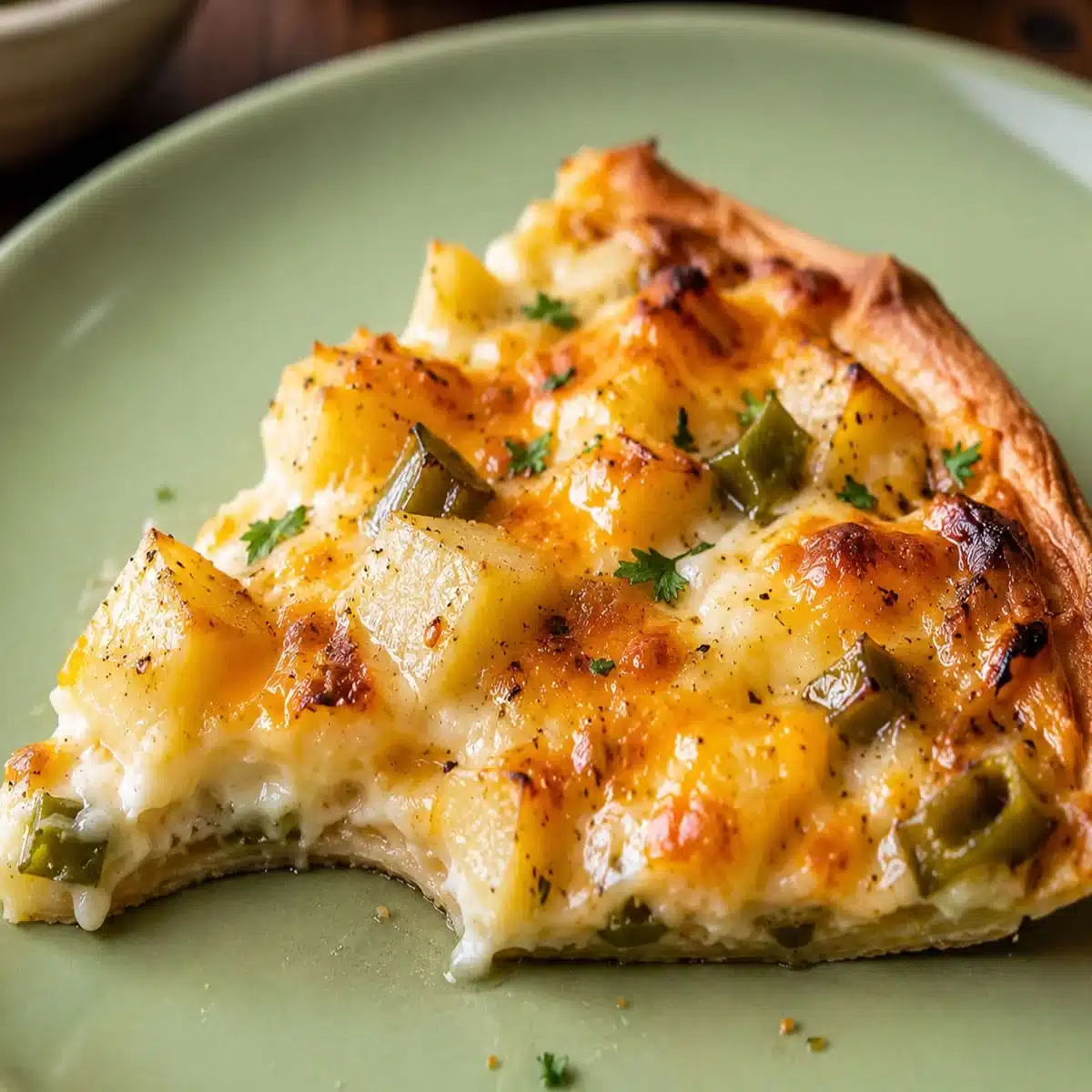
This pizza is rich, creamy, and satisfying, so it pairs best with something crisp, bright, or refreshing. A green salad with a tangy dressing works beautifully beside the cheesy potato topping.
For a cozy weeknight dinner, serve it with tomato soup or roasted vegetables. In addition, a light cucumber salad helps balance the creamy garlic sauce.
For brunch, cut the pizza into smaller squares and serve it with fruit, coffee, or a simple egg dish. The rosemary and potato flavors feel especially good for a relaxed weekend table.
For parties, slice it into smaller appetizer pieces. The creamy sauce, crisp crust, and glossy melted cheese make it easy to serve as a vegetarian option.
Would you serve this Homemade potato pizza as a cozy family dinner, a brunch recipe, or a party appetizer?
Nutrition Breakdown
Estimated per serving:
Calories: 345
Protein: 13g
Carbs: 39g
Fat: 16g
Sugar: 3g
Fiber: 3g
Sodium: 570mg
Cholesterol: Estimated value varies by dough, cheese, milk, cream, and butter
Nutritional values are estimates and will vary according to the dough, cheese, and toppings used.
Make-Ahead, Storage & Reheating
At room temperature, do not leave the pizza out for more than 2 hours. Since it contains cheese and cream sauce, refrigerate leftovers promptly.
Store leftover pizza in an airtight container in the refrigerator for up to 4 days. For the best texture, separate slices with parchment if stacking.
To freeze, wrap cooled slices tightly and place them in a freezer-safe bag or container. Freeze for up to 2 months.
To thaw, place frozen slices in the refrigerator overnight. Then reheat until the cheese is warm and the crust becomes crisp again.
For the best reheating method, warm individual slices in a skillet over medium-low heat for 4 to 5 minutes. Cover the pan during the final minute so the cheese melts.
You can also reheat slices in a 375°F oven for 7 to 10 minutes. This helps restore the crust better than the microwave.
For an air fryer, reheat at 350°F for 3 to 5 minutes. Watch closely so the cheese does not overbrown.
Avoid microwaving if you want a crisp crust. The microwave softens the dough and can make the potatoes feel steamy.
For make-ahead prep, parboil and season the potatoes, make the sauce, and refrigerate both separately. Then assemble and bake the pizza fresh.
Best Reader Questions Answered Quickly
Can I use another potato? Yes, but Yukon Gold potatoes give the best creamy texture.
Can I make it ahead? Yes, prep the potatoes and sauce ahead, then assemble before baking.
Is this pizza vegetarian? Yes, this version is vegetarian.
Can I use store-bought dough? Yes, refrigerated pizza dough works well.
How do I make it crispier? Preheat the baking surface and dry the potatoes well.
Potato Pizza Common Questions & Expert Answers
How to make a good potato pizza?
To make a good potato pizza, start with a crisp pizza dough, a flavorful potato pizza sauce, and thinly sliced or parboiled potatoes. For the best texture, use a creamy white sauce, mozzarella, Parmesan, rosemary, olive oil, and evenly cut potatoes. This creates a golden, cheesy, comforting pizza with tender potatoes and crisp edges.
Do you cook potatoes before putting them on pizza?
Yes, for easy homemade potato pizza, it is best to partially cook the potatoes before baking. Parboiling cubes or thinly slicing potatoes helps them become tender by the time the crust turns golden. If you skip this step, the potatoes may stay firm while the cheese and crust finish baking.
What type of potatoes are best for making pizza?
Yukon Gold potatoes are one of the best choices for potato pizza because they become creamy inside while holding their shape. They work beautifully for potato pizza with white sauce, rosemary, mozzarella, and Parmesan. Russet potatoes can also work, but they may become softer and more delicate after baking.
What is Roman-style pizza with potato and rosemary?
Roman-style pizza with potato and rosemary is a simple Italian-inspired pizza often made with thin potato slices, olive oil, rosemary, salt, and a crisp dough base. It is usually lighter than cheesy potato pizza, but you can adapt the idea into a homemade potato pizza recipe with white sauce, garlic, and melted cheese.
Can I make homemade potato pizza dough from scratch?
Yes, homemade potato pizza dough can be made with basic pizza dough ingredients like flour, yeast, water, salt, and olive oil. However, store-bought dough also works well for a faster version. The key is stretching the dough thin enough for a crisp base, then topping it with potatoes, sauce, cheese, and rosemary.
More Delicious Ideas
Try our Pizza Quesadilla – Easy Skillet Dinner Recipe.
Save our Pizza Chips – Easy Baked Snack for Parties.
Make our High Protein Honey BBQ Chicken Mac and Cheese Recipe next.
Try our Pineapple Coconut Cream Dessert – No-Bake Summer Treat.
From My Kitchen to Yours
Homemade potato pizza is everything a cozy vegetarian dinner should be: crisp at the edges, creamy in the center, fragrant with rosemary, and covered with bubbling cheese. It feels rustic and familiar, yet special enough to share.
This is the kind of pizza that works for casual family dinners, weekend brunch, game day, or simple entertaining. In addition, the creamy garlic sauce and tender Yukon Gold potatoes make each slice rich, satisfying, and memorable.
Would you keep it classic with rosemary and cheese, or would you add bacon, mushrooms, or hot honey? And would you serve it for dinner, brunch, or your next pizza night?
Save this recipe, share it with another potato lover, and leave a comment with your favorite topping idea.
Print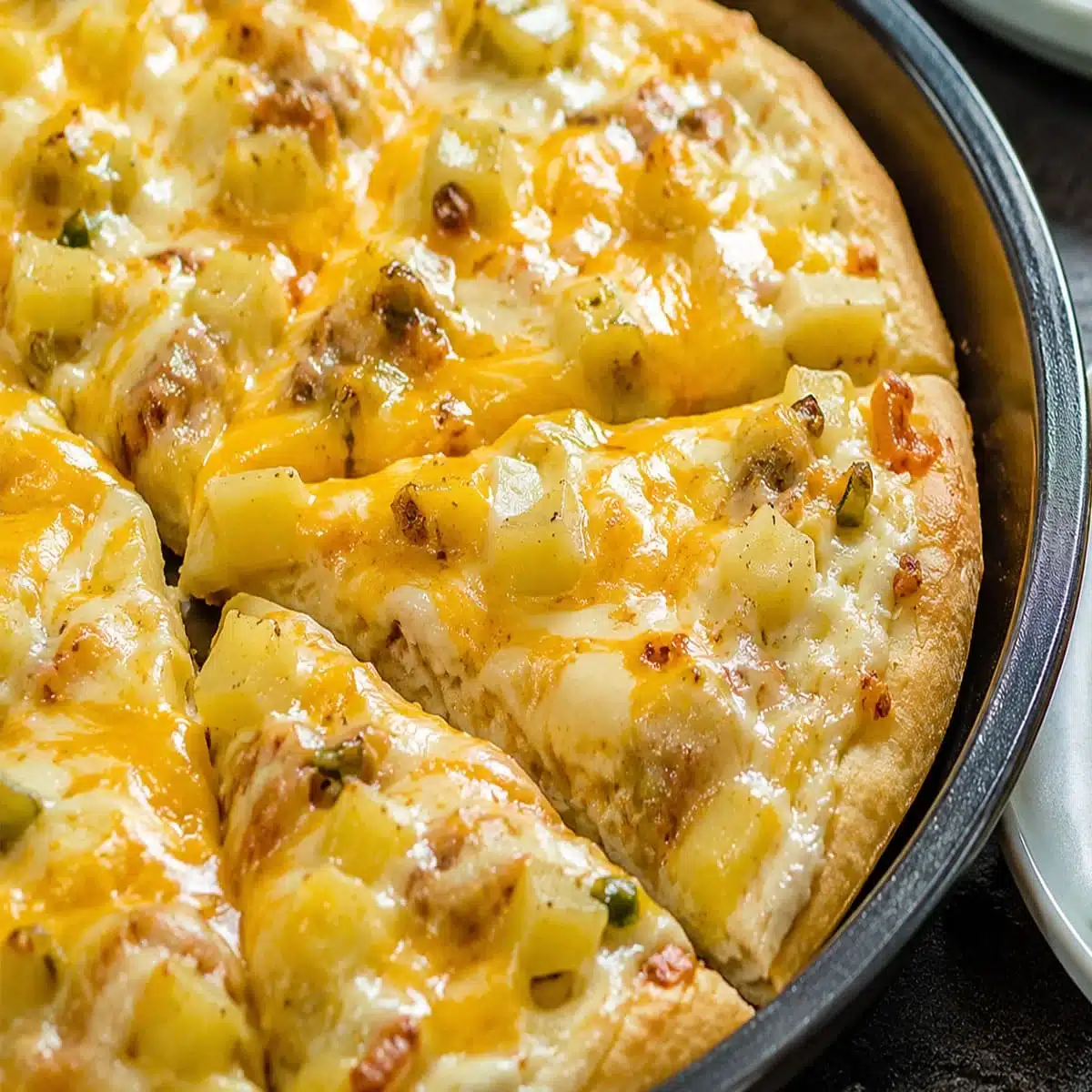
Homemade Potato Pizza – Easy Vegetarian Dinner
- Total Time: 42 minutes
- Yield: 8 slices 1x
- Diet: Vegetarian
Description
Homemade potato pizza is a cozy vegetarian pizza with a crisp golden crust, creamy garlic sauce, tender rosemary potatoes, melted mozzarella, sharp cheddar, and Parmesan.
Ingredients
- 1 pound refrigerated or homemade pizza dough
- 2 medium Yukon Gold potatoes, peeled and cut into small cubes
- 1 tablespoon olive oil
- 1 teaspoon finely chopped fresh rosemary
- 1/2 teaspoon garlic powder
- 1/2 teaspoon salt
- 1/4 teaspoon freshly ground black pepper
- 1 1/2 cups shredded mozzarella cheese
- 3/4 cup shredded sharp cheddar cheese
- 2 tablespoons grated Parmesan cheese
- 1 tablespoon chopped fresh parsley or green onion
- 1 tablespoon unsalted butter
- 2 garlic cloves, finely minced
- 1 tablespoon all-purpose flour
- 3/4 cup whole milk
- 1/4 cup heavy cream
- 1/4 teaspoon salt
- 1/8 teaspoon black pepper
- 1/4 cup grated Parmesan cheese
Instructions
- Place the diced potatoes in a saucepan and cover them with cold water. Add a small pinch of salt and bring to a gentle boil.
- Cook the potatoes for 5 to 7 minutes, or until they are just beginning to soften but still hold their shape.
- Drain the potatoes thoroughly and let them steam-dry for several minutes.
- Transfer the potatoes to a bowl. Add olive oil, rosemary, garlic powder, salt, and black pepper. Toss gently until evenly coated.
- Melt the butter in a small saucepan over medium-low heat. Add the minced garlic and cook for about 30 seconds, stirring constantly.
- Sprinkle in the flour and cook for 1 minute, then slowly whisk in the milk and heavy cream until smooth.
- Cook for 2 to 4 minutes, stirring frequently, until the sauce thickens slightly. Remove from heat and stir in Parmesan, salt, and black pepper.
- Preheat the oven to 475°F and place a pizza stone or inverted baking sheet inside while the oven heats.
- Lightly grease a 12-inch pizza pan or line a baking sheet with parchment paper.
- Stretch the pizza dough into a 12-inch circle and transfer it to the prepared pan. Press the edges outward to create a slightly raised crust.
- Spread the creamy garlic sauce evenly over the dough, leaving a small border around the outside.
- Sprinkle half of the mozzarella and cheddar over the sauce, then arrange the seasoned potato cubes evenly across the pizza.
- Finish with the remaining mozzarella, cheddar, and grated Parmesan.
- Bake for 13 to 17 minutes, or until the crust is golden, the potatoes are tender, and the cheese is melted, glossy, and bubbling with lightly browned spots.
- For deeper color, broil for 1 to 2 minutes at the end, watching carefully so the cheese does not burn.
- Let the pizza rest for 5 minutes before slicing. Garnish with fresh parsley, green onion, or a small amount of additional rosemary.
Notes
- Cut the potatoes into evenly sized cubes so they cook at the same rate.
- Do not fully cook the potatoes during boiling; they should finish cooking in the oven.
- Let the drained potatoes steam-dry before seasoning to prevent a soggy crust.
- Use low-moisture mozzarella for better melting and a crispier pizza base.
- Preheat the baking surface to help the bottom crust become golden and crisp.
- Keep the garlic sauce creamy and spreadable, not overly thick.
- Broil only at the end for extra color, and watch closely to prevent burning.
- Brush the hot crust with melted garlic butter after baking for an extra glossy finish.
- Store leftovers in an airtight container in the refrigerator for up to 4 days.
- Reheat in a skillet, oven, or air fryer for the best crust texture.
- Prep Time: 25 minutes
- Cook Time: 17 minutes
- Category: Main Course
- Method: Baking
- Cuisine: American-Italian
Nutrition
- Serving Size: 1 slice
- Calories: 345 kcal
- Sugar: 3g
- Sodium: 570mg
- Fat: 16g
- Saturated Fat: 8g
- Unsaturated Fat: Estimated 7g
- Trans Fat: 0g
- Carbohydrates: 39g
- Fiber: 3g
- Protein: 13g
- Cholesterol: Estimated 35mg