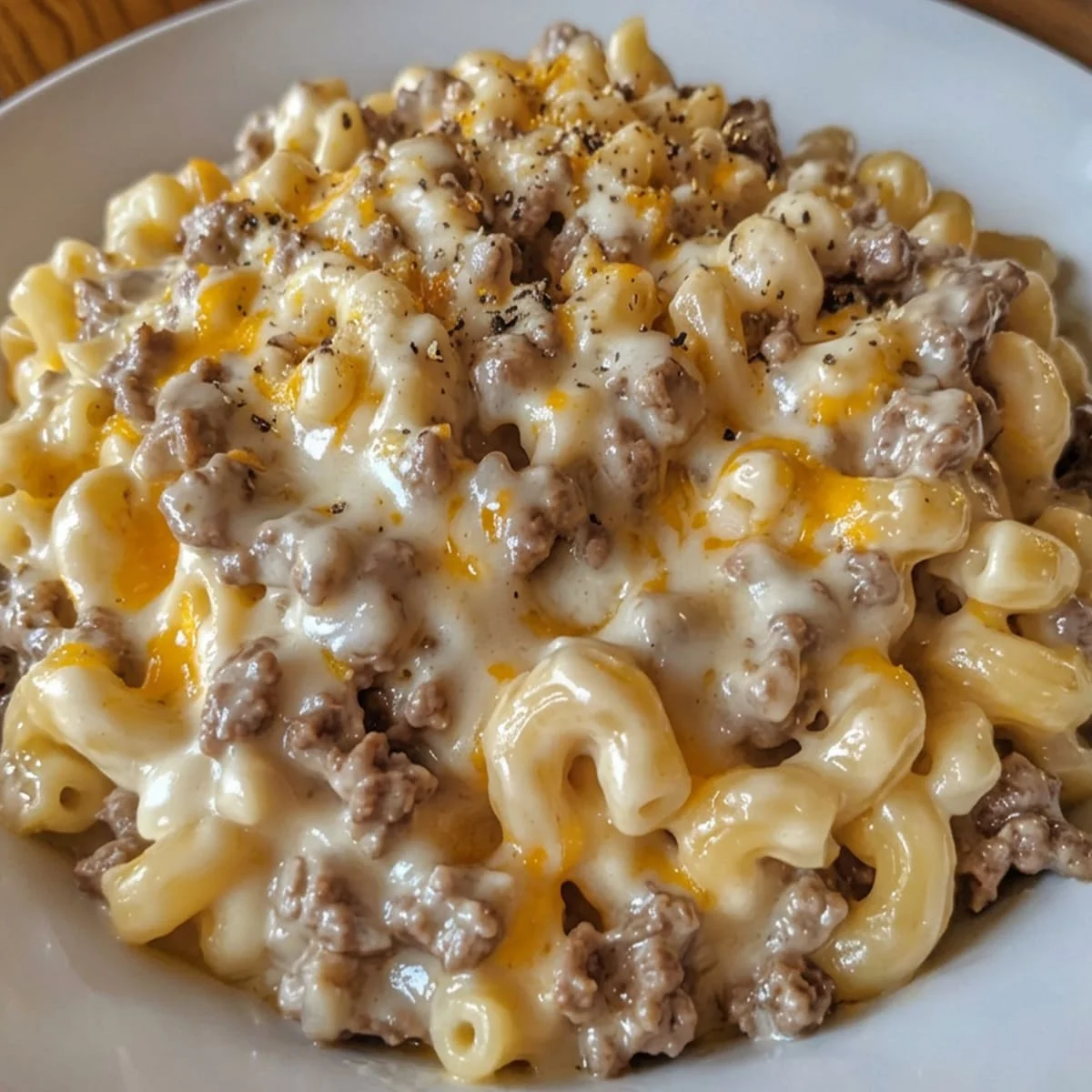
Ranch Beef and Cheddar Macaroni Melt combines browned ground beef, tender elbow macaroni, and a creamy cheddar sauce seasoned with ranch herbs and spices. Cream cheese gives the sauce its rich body, while cheddar adds the familiar flavor of homemade macaroni and cheese.
The stovetop version takes approximately 30 minutes and makes four hearty servings. Serve it creamy straight from the skillet, or finish it with an optional broiled cheese topping for a lightly golden surface.
The pasta cooks separately while you brown the beef. That overlap keeps preparation efficient and gives you control over the macaroni’s texture before it meets the cheese sauce.
Why You’ll Love This Recipe
- Simple ingredients: Ground beef, macaroni, dairy, and dry ranch seasoning.
- Creamy sauce without a flour roux: Cream cheese and cheddar provide the body.
- Flexible finishing: Enjoy it from the skillet or add a melted cheese topping.
- A filling main course: One batch makes four generous portions.
- Easy adjustments: Add small splashes of pasta water to control the sauce’s thickness.
Ingredients for Ranch Beef and Cheddar Macaroni Melt
Main Ingredients
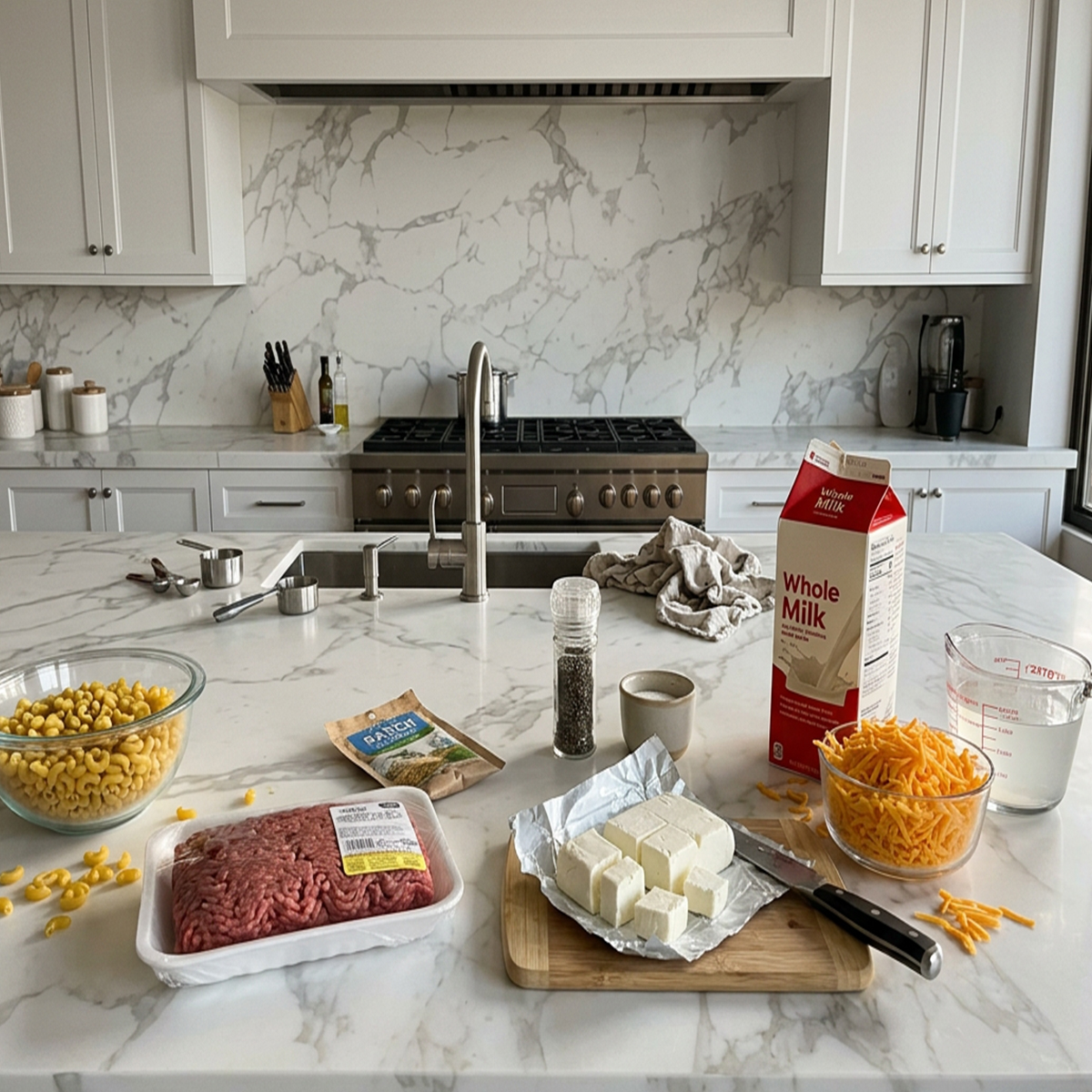
- 8 ounces (227 g) dry elbow macaroni, approximately 2 cups dry, depending on brand
- 1 pound (454 g) ground beef, preferably 90% lean
- 1 packet (1 ounce / 28 g) dry ranch seasoning, divided; start with two-thirds and add the remainder to taste
- 4 ounces (113 g) full-fat block cream cheese, softened and cubed
- 1 cup (240 ml) whole milk
- 1½ cups (approximately 170 g) freshly shredded cheddar
- ¼ teaspoon freshly ground black pepper, or to taste
- Salt, only if needed
- 1 cup (240 ml) reserved pasta cooking water, using only as much as needed
Optional Cheese Topping
- An additional ½ cup (approximately 55 g) shredded cheddar
Ingredient Notes
Measure the pasta dry. Eight ounces of standard elbow macaroni generally produces approximately 4–4½ cups cooked. The exact volume depends on the brand and shape, so weight is the clearest measurement. Barilla’s standard elbow guidance gives approximately 4½ cups cooked from half a one-pound package.
Choose block cream cheese. Use half of a standard eight-ounce block. Softened cubes blend into milk more easily than a large, cold piece.
Use dry ranch seasoning. Bottled ranch dressing adds liquid, fat, and acidity and isn’t an equal replacement in this recipe.
Add salt at the end. Ranch seasoning and cheddar already contain salt. Starting with part of the packet lets you adjust the flavor after everything is combined.
Shred the cheddar before cooking. Having it ready allows you to melt it gradually without leaving the sauce on the heat longer than necessary.
How to Make Ranch Beef and Cheddar Macaroni Melt
Step 1: Cook the Macaroni
Bring a pot of water to a boil and salt it lightly. Add the macaroni and cook according to the package’s al dente timing.
Before draining, reserve one cup of pasta cooking water. Drain the macaroni without rinsing.
The pasta should be tender with a little firmness remaining because it will soften slightly when stirred into the hot sauce.
Step 2: Brown the Ground Beef
While the pasta cooks, heat a large, deep skillet over medium-high heat.
Add the ground beef and break it into small crumbles with a spatula or wooden spoon. Cook for approximately 6–8 minutes, turning and stirring as needed.
Cook ground beef to 160°F (71°C), checked with a food thermometer. Browning alone doesn’t confirm that it has reached a safe temperature.
Drain excess rendered fat and transfer the cooked beef to a bowl. Lower the heat and allow the skillet to cool briefly before adding the dairy.
Step 3: Make the Creamy Ranch Base
Pour the milk into the skillet over low heat. Add the softened cream cheese and approximately two-thirds of the ranch packet.
Whisk or stir for 3–5 minutes, until the cream cheese melts and the mixture becomes smooth.
Scrape up browned beef residue for flavor, avoiding any burnt pieces. Keep the heat gentle so the milk doesn’t reduce too quickly or scorch.
Step 4: Melt the Cheddar
Remove the skillet from the heat.
Add the 1½ cups shredded cheddar a handful at a time, stirring until each addition melts before adding more.
If the mixture cools before all the cheese melts, return it briefly to very low heat while stirring. Avoid a rolling boil. Hidden Valley’s stovetop ranch macaroni method also removes the sauce from the heat before incorporating the cheese.
Step 5: Combine the Beef, Pasta, and Sauce
Fold the cooked beef and drained macaroni into the cheese sauce.
If the mixture feels too thick, add reserved pasta water one or two tablespoons at a time, stirring after each addition.
The sauce should coat the macaroni while remaining loose enough to stir easily. You may not need all the reserved water.
Return the skillet to low heat briefly if needed to heat the mixture through. Stir in the black pepper, taste, and add more ranch seasoning or a small pinch of salt only if necessary.
Step 6: Serve While Creamy
Serve immediately for the creamiest consistency.
The macaroni continues absorbing moisture as it stands, so avoid reducing the sauce until it becomes stiff. A slightly loose coating in the skillet will thicken naturally after serving.
Prep: approximately 10 minutes | Cook: approximately 20 minutes | Total: approximately 30 minutes | Kcal: approximately 730 per serving | Servings: 4 hearty portions
Calories are an ingredient-based estimate using 90% lean beef and excluding the optional topping. Brands and the amount of fat drained affect the result.
Optional Broiled Cheese Topping
Preheat the broiler and position the rack approximately six inches below the heating element, following your appliance and cookware instructions.
Keep the pasta in its skillet only if the entire skillet is broiler-safe. Otherwise, transfer the hot mixture to a broiler-safe baking dish.
Sprinkle with the additional half cup of cheddar. Broil for approximately 1–3 minutes, watching continuously, until the cheese melts and becomes lightly golden.
The pasta and beef should already be cooked and hot before broiling. This step finishes the topping; it doesn’t replace cooking or reheating the filling.
Allow additional time beyond the 30-minute stovetop estimate for broiler preheating and finishing.
Tips and Troubleshooting
| Problem | Likely cause | What to do |
|---|---|---|
| Sauce is too thick | Pasta absorbed moisture or sauce reduced too far | Stir in warm pasta water or milk a little at a time. |
| Sauce is too thin | Too much adjustment liquid | Let it stand briefly and stir; the pasta will absorb some moisture. |
| Sauce looks grainy or oily | Cheese overheated or excess beef fat remained | Remove from heat and gently stir in a splash of warm milk. A badly split sauce may not fully recover. |
| Cream cheese leaves lumps | It was cold or added in large pieces | Use small, softened cubes and blend them into the milk before adding cheddar. |
| Pasta becomes mushy | It was overcooked before mixing | Cook only to al dente and keep the finishing step brief. |
| Dish tastes too salty | Seasoning, cheese, and salted pasta water combined | Add no more salt. Diluting with additional unsalted pasta and dairy will change the yield. |
For smoother preparation, grate the cheese, cube the cream cheese, and measure the milk before starting. Keep the beef crumbles small enough to distribute evenly through the macaroni.
Substitutions and Variations
Ground Turkey
Replace the beef with the same weight of ground turkey. Cook ground poultry to 165°F (74°C). The flavor and richness will differ from the beef version.
Different Pasta Shapes
Small shells, rotini, or cavatappi can work. Use eight ounces dry by weight and follow the package timing.
Equal cup measurements aren’t consistent across different pasta shapes.
Cheddar and Mozzarella
Replace ½ cup of the cheddar in the sauce with ½ cup shredded low-moisture mozzarella.
Keep the total sauce cheese at 1½ cups. This gives you a different melt while retaining cheddar flavor.
Add Vegetables
Fold approximately one cup of cooked, well-drained broccoli or peas into the pasta.
If the additional ingredients make the mixture too thick, loosen it with a splash of milk.
Sour Cream Variation
Sour cream produces a tangier, less rich sauce and needs a different method:
- Omit the cream cheese.
- Begin with ¾ cup (180 ml) milk and the ranch seasoning.
- Warm gently, then remove from the heat.
- Stir in the cheddar until melted.
- Stir in ½ cup (120 g) full-fat sour cream.
- Fold in the hot beef and macaroni, adjusting with pasta water as needed.
Warm gently if necessary, and avoid boiling after adding sour cream. This variation needs its own kitchen test before being described as tested.
What to Serve With Ranch Beef and Cheddar Macaroni Melt
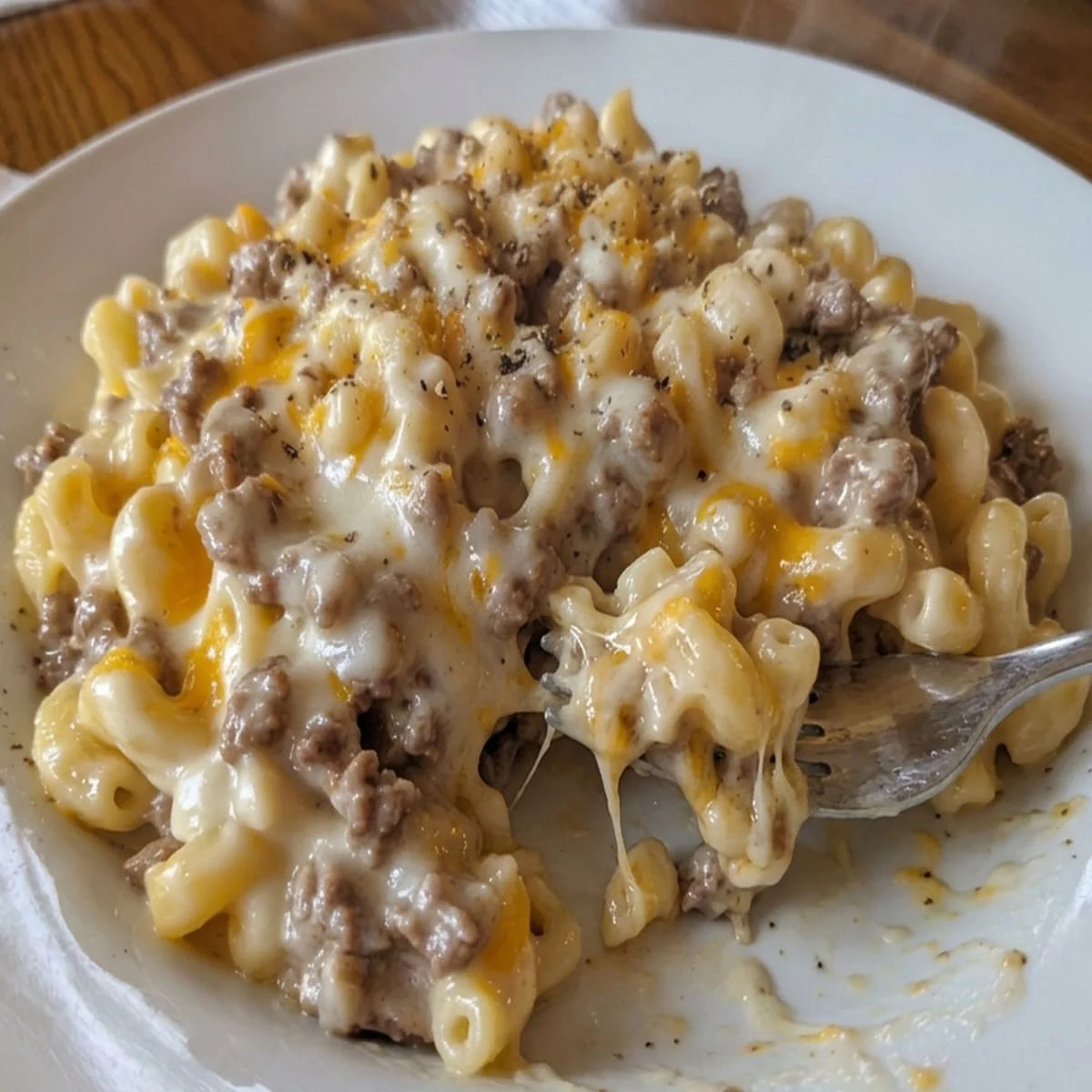
Pair this rich beef macaroni with a green salad, steamed green beans, roasted carrots, or broccoli.
A tomato and cucumber salad provides a fresh contrast to the creamy sauce. Garlic bread is another option for scooping up the extra sauce.
Keep sides lightly seasoned, especially when using the full ranch packet.
Storage and Reheating
Refrigerating
Divide leftovers into shallow containers and refrigerate within two hours, or within one hour when the temperature is above 90°F (32°C).
Keep refrigerated at 40°F (4°C) or colder and use within 3–4 days.
Reheating
Add a splash of milk or water to loosen the sauce.
Reheat in a skillet over gentle heat, stirring frequently. For the microwave, cover loosely and heat in short intervals, stirring between them.
Leftovers should reach 165°F (74°C) throughout. Check several spots with a food thermometer. ask.fsis.usda.gov
Freezing
For best texture, freeze in airtight, meal-size containers for up to two months. Thaw overnight in the refrigerator before reheating.
The pasta may soften and the dairy sauce may separate slightly after freezing.
Preparing Ahead
Cook the beef a day ahead, cool it promptly, and refrigerate it. For the best texture, cook the macaroni and prepare the sauce shortly before serving.
Ranch Beef and Cheddar Macaroni Melt FAQs
Is the macaroni measured dry or cooked?
In this version, use eight ounces of dry macaroni, approximately two cups for many standard elbow brands. This produces roughly 4–4½ cups cooked.
The original two cups cooked would make a smaller, more beef-heavy dish.
Can I cook the dry pasta directly in the sauce?
Not with these quantities. The milk is measured for coating already-cooked macaroni.
A version that cooks dry pasta directly in the skillet needs a different liquid amount and cooking method.
Can I substitute bottled ranch dressing?
It isn’t a direct substitution. Use dry ranch seasoning to avoid changing the sauce’s liquid, fat, and acidity.
Can I use sour cream instead of cream cheese?
Yes, using the separate sour cream method above. Reduce the initial milk and stir the sour cream in off the heat after melting the cheddar.
Expect a different flavor and consistency.
Do I have to broil the pasta?
No. The stovetop version is ready once the cooked beef and macaroni are hot and coated in sauce.
Broiling simply adds an optional melted cheese topping.
More Tasty Recipes to Try
Explore these related recipes from OptimalRecipes.com:
- Cheesy Beef and Bowtie Pasta — Ground beef and farfalle with a creamy garlic-butter sauce.
- Cheesy Beef and Noodles Skillet — A hearty combination of beef, noodles, and cheddar.
- Cheesy Beef Taco Pasta — Taco-seasoned beef and pasta shells with a creamy cheese finish.
Final Thoughts
Ranch Beef and Cheddar Macaroni Melt turns ground beef and a small box of pasta into a rich, comforting dinner. Brown and drain the beef, melt the cheese gently, and adjust the sauce with small splashes of pasta water until it coats every piece.
Serve it creamy from the skillet or add the optional golden topping. Save this recipe for a busy evening, and leave a comment sharing your favorite cheese combination or vegetable addition.