Every year, more than 100 million people step up to the iconic red-and-white counters of the Costco food court — making it one of the largest quick-service restaurant operations on the planet. Despite inflation reshaping nearly every fast-food menu in America, Costco has kept its food court prices remarkably stable heading into 2026, with the legendary hot dog combo still holding firm at $1.50 and cheese pizza slices ringing up at just $1.99. But low prices shouldn’t mean blind eating.
Whether you visit the food court every Costco run or only grab a slice once a month, the calories, fat, sodium, and protein in these items can significantly impact your daily nutrition goals. This comprehensive guide breaks down every single Costco food court menu item with exact calorie counts, full macronutrient profiles, current 2026 prices, and practical tips for making smarter choices. We’ve analyzed each item so you can enjoy the unbeatable value of the Costco food court without derailing your diet — or at least know exactly what you’re getting when you do indulge.
Complete Costco Food Court Menu Nutrition Breakdown
Below is the full nutrition comparison for every major item currently available at the Costco food court in 2026. All values reflect standard serving sizes as sold at the counter. Use this master table as your quick-reference guide, then scroll down for deep-dive analyses of each item, including tips for portion control, macro optimization, and how each option fits into common daily calorie budgets.
| Menu Item | Calories | Total Fat (g) | Protein (g) | Carbs (g) | Sodium (mg) | Price |
|---|---|---|---|---|---|---|
| Hot Dog & Soda Combo | 470 | 27 | 20 | 36 | 1,170 | $1.50 |
| Chicken Bake | 770 | 32 | 46 | 70 | 1,500 | $3.99 |
| Cheese Pizza (slice) | 700 | 28 | 44 | 70 | 1,370 | $1.99 |
| Pepperoni Pizza (slice) | 720 | 32 | 34 | 68 | 1,500 | $1.99 |
| Açaí Bowl | 340 | 7 | 4 | 67 | 30 | $4.99 |
| Berry Sundae | 380 | 12 | 7 | 62 | 170 | $1.99 |
| Twisted Churro | 490 | 22 | 7 | 70 | 560 | $1.49 |
| Rotisserie Chicken (3 oz serving) | 140 | 7 | 17 | 0 | 460 | $4.99 (whole) |
| Muffin (1 muffin) | 690 | 34 | 8 | 89 | 590 | $8.99 (6-pack) |
A few things jump out immediately when you look at the numbers side by side. First, sodium is the silent issue across nearly every savory item on the menu. The hot dog, chicken bake, and both pizza slices all exceed 1,100 mg of sodium per serving — meaning a single item can account for roughly half of the American Heart Association’s recommended daily limit of 2,300 mg. Second, the protein-to-calorie ratio varies dramatically.
The chicken bake delivers 46 grams of protein for its 770 calories, giving it the best protein density of any prepared item on the menu. Meanwhile, the açaí bowl and twisted churro offer minimal protein relative to their calorie and carbohydrate loads. If you’re eating at the Costco food court with specific fitness or weight-management goals, these distinctions matter enormously. The rotisserie chicken stands in a class of its own as a zero-carb, high-protein option — though it’s technically sold from the deli rather than the food court counter. We include it here because millions of Costco shoppers treat it as their food court meal, eating it in the seating area or in the car immediately after checkout.
Costco Hot Dog & Soda Combo — The $1.50 Legend
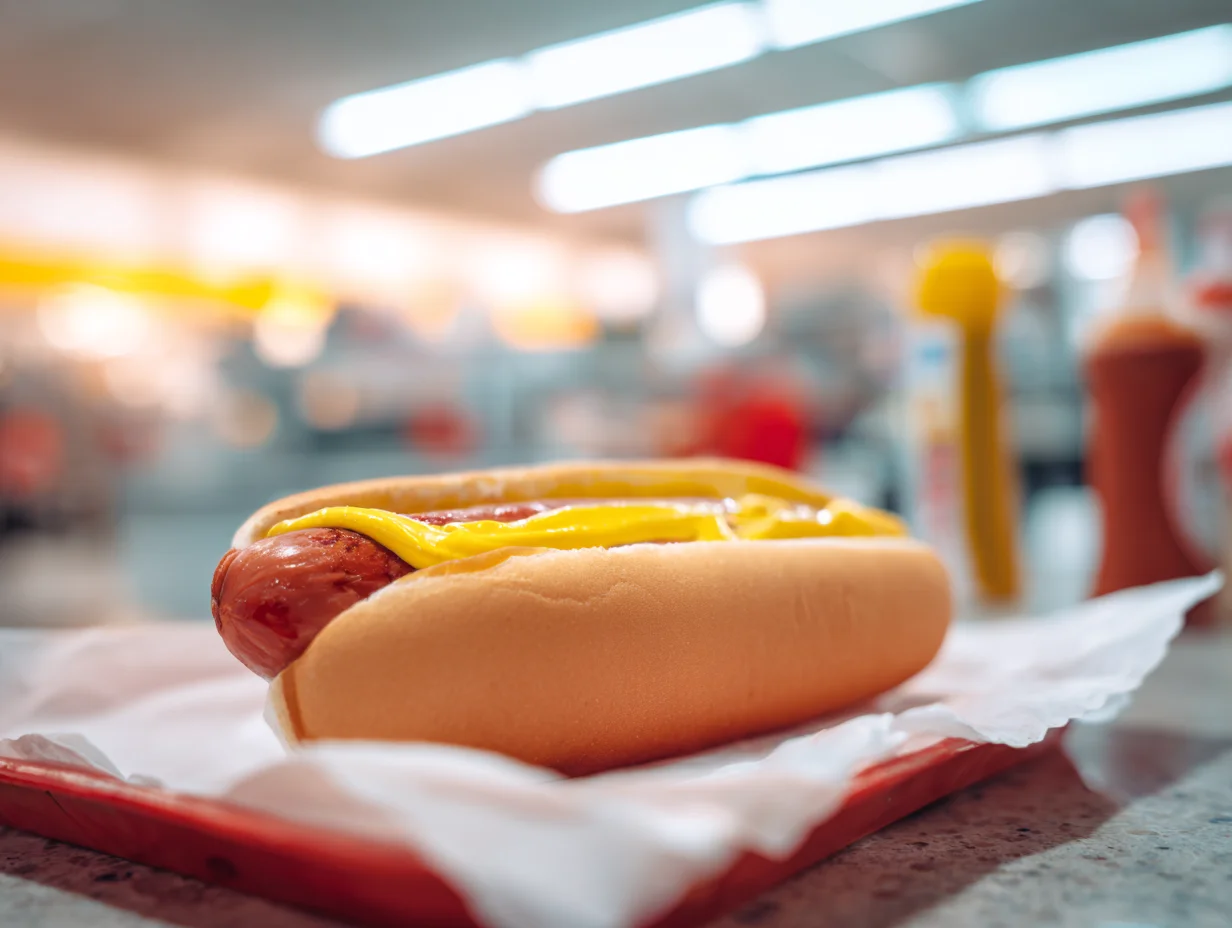
No conversation about the Costco food court is complete without starting at the hot dog counter. The Kirkland Signature all-beef hot dog paired with a 20-ounce fountain drink has remained at $1.50 since 1985 — a price point that Costco co-founder Jim Sinegal famously threatened to protect at all costs. In 2026, it remains the single best dollar-for-dollar fast food deal in America. But what exactly are you consuming?
The hot dog itself — a quarter-pound all-beef frank served in a standard white-flour bun — clocks in at 470 calories, 27 grams of fat, 20 grams of protein, and 36 grams of carbohydrates. The most significant nutritional concern is sodium: at 1,170 mg per serving, a single hot dog delivers more than half of the ideal daily sodium intake recommended by many cardiologists.
From a macronutrient perspective, the hot dog combo is moderately balanced for a fast-food item. The 20 grams of protein provide reasonable satiety, and the total calorie count of 470 is actually lower than many people expect — especially compared to the 700-calorie pizza slice sitting just a few feet away on the menu board. The biggest variable is what you add on top. Costco food courts offer a free condiment station with ketchup, mustard, onions, relish, and sauerkraut.
Plain yellow mustard adds negligible calories, while loading up on relish and ketchup can tack on an extra 40–80 calories and additional sugar. The included soda is where calorie counts can quietly explode — a 20-ounce Pepsi adds roughly 250 calories and 69 grams of sugar, potentially pushing the true combo total past 720 calories. A simple swap to diet soda or water from the fountain eliminates those empty calories entirely. For the complete breakdown, see our Costco hot dog calorie guide.
Strategically, the hot dog combo works best as a moderate, controlled meal when paired with water or a zero-calorie drink and kept to minimal condiments. Under those conditions, you’re looking at a filling 470-calorie lunch for $1.50 with 20 grams of protein — a ratio that’s nearly impossible to beat in any other quick-service setting in the United States.
Costco Chicken Bake Nutrition
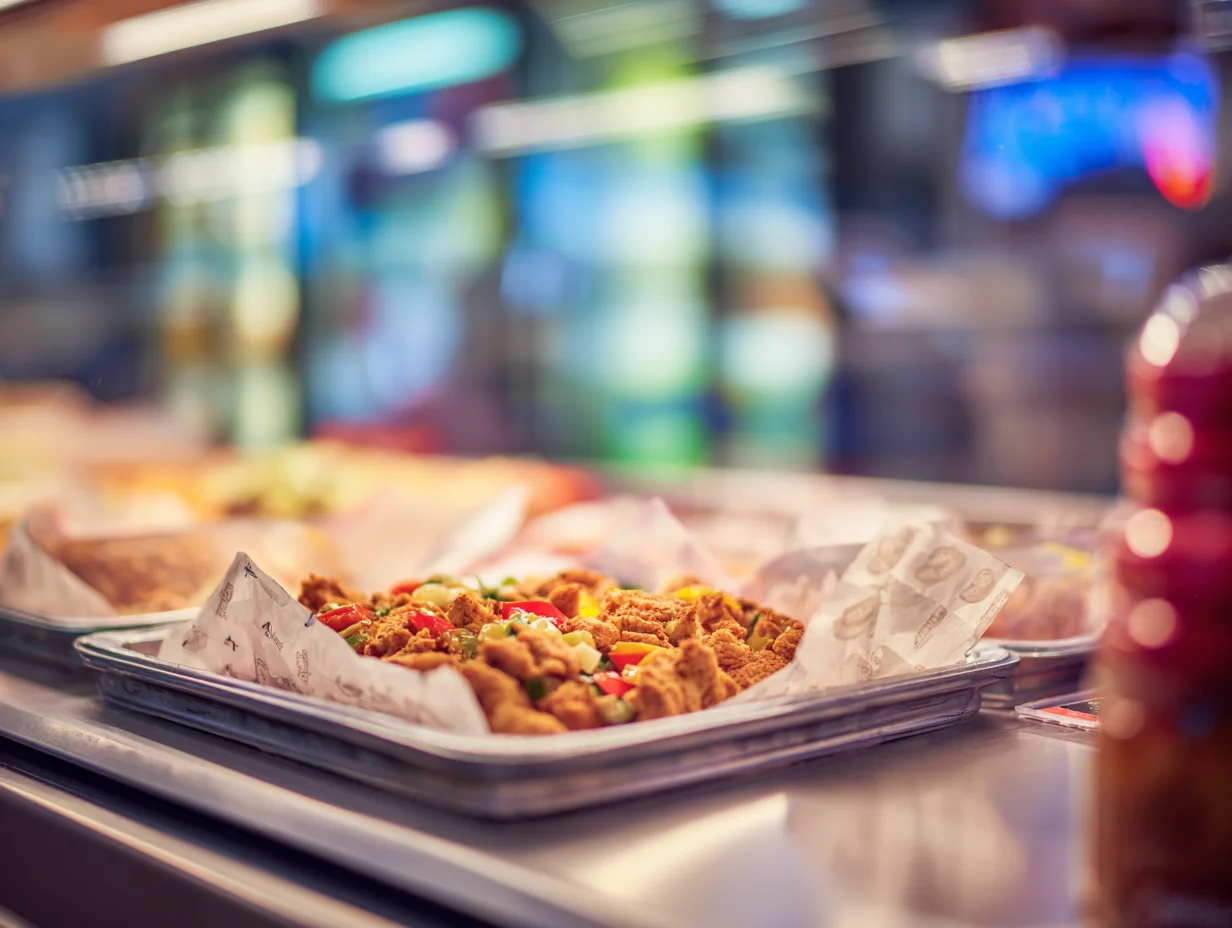
The Costco chicken bake is the food court’s heavyweight — in both size and nutritional impact. This oversized rolled bread pocket is stuffed with seasoned chicken breast, bacon, cheese, and Caesar dressing, then baked until golden. At 770 calories per serving, it is one of the most calorie-dense single items on the menu, but it also delivers the highest protein count of any prepared food court item at a substantial 46 grams of protein. That protein-to-calorie ratio of roughly 1 gram of protein per 16.7 calories makes the chicken bake a surprisingly effective option for those prioritizing muscle protein synthesis, post-workout recovery, or simply staying full for hours on a busy shopping day.
However, the chicken bake’s downsides are real and worth weighing carefully. The 32 grams of total fat include a significant contribution from the bacon and cheese filling, and the 70 grams of carbohydrates come primarily from the thick bread shell that encases the entire item. Most concerning for cardiovascular-conscious eaters is the 1,500 mg of sodium — the highest single-item sodium count on the entire Costco food court menu, representing 65% of the recommended daily limit in one sitting. If you’re monitoring blood pressure or following a low-sodium plan, the chicken bake is a difficult item to justify even occasionally.
At $3.99, the chicken bake remains an exceptional value for the sheer volume of food and protein you receive. Many gym-goers and macro-trackers deliberately seek it out as a high-protein meal that costs less than a single scoop of premium protein powder at retail prices. For those who want to moderate the calorie impact, one practical strategy is to eat only half of the chicken bake in one sitting — yielding roughly 385 calories and 23 grams of protein — and save the other half for a second meal. You can find the full chicken bake nutrition breakdown in our detailed companion guide, including comparisons to homemade versions with reduced sodium.
Costco Pizza Nutrition (Per Slice & Whole)
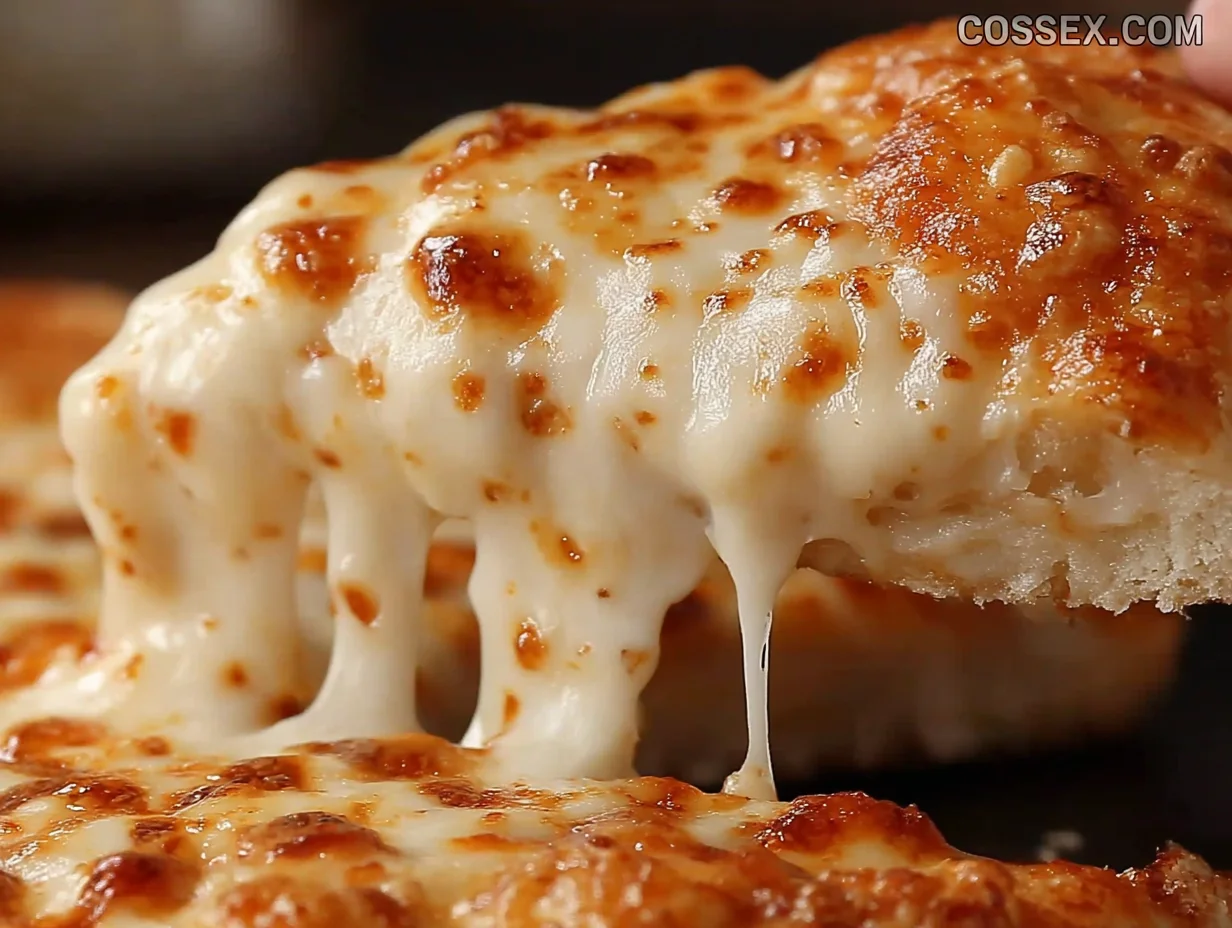
Costco pizza is one of the most popular food court items in America, and for good reason: the slices are enormous, the cheese pull is legendary, and the price has barely budged. But the nutritional cost of those massive 18-inch pies is something every regular Costco shopper should understand. Below is a detailed comparison of all available pizza varieties — broken down by both individual slice and whole-pie totals — so you can make an informed choice at the counter.
| Pizza Variety | Serving | Calories | Total Fat (g) | Protein (g) | Carbs (g) | Sodium (mg) | Price |
|---|---|---|---|---|---|---|---|
| Cheese Pizza | 1 Slice (1/6 pie) | 700 | 28 | 44 | 70 | 1,370 | $1.99 |
| Cheese Pizza | Whole 18″ Pie (6 slices) | 4,200 | 168 | 264 | 420 | 8,220 | $9.95 |
| Pepperoni Pizza | 1 Slice (1/6 pie) | 720 | 32 | 34 | 68 | 1,500 | $1.99 |
| Pepperoni Pizza | Whole 18″ Pie (6 slices) | 4,320 | 192 | 204 | 408 | 9,000 | $9.95 |
| Combo Pizza* | 1 Slice (1/6 pie) | 680 | 29 | 36 | 72 | 1,490 | $1.99 |
| Combo Pizza* | Whole 18″ Pie (6 slices) | 4,080 | 174 | 216 | 432 | 8,940 | $9.95 |
*Combo pizza availability varies by location. Some Costco food courts discontinued the combo pizza in recent years; check your local warehouse for current offerings.
The numbers are striking. A single slice of Costco cheese pizza — at 700 calories — contains more calories than a McDonald’s Big Mac (590 calories) and approaches the calorie count of an entire Chipotle chicken burrito. The reason is simple: Costco slices are roughly twice the size of a standard pizzeria slice. Each 18-inch pie is cut into only six slices, meaning every piece represents a genuinely massive portion of dough, sauce, and cheese. The cheese variety actually delivers an impressive 44 grams of protein per slice, largely thanks to the generous blanket of mozzarella, making it the highest-protein pizza option. Pepperoni, somewhat counterintuitively, offers less protein at 34 grams because some of the cheese is displaced by pepperoni slices that contribute more fat than protein per gram.
Sodium remains the biggest nutritional red flag with Costco pizza. Every single variety exceeds 1,350 mg of sodium per slice, and consuming two slices — which is not uncommon for a hungry adult — would push sodium intake past 2,700 mg, blowing through the entire daily recommended limit before any other meal is factored in. If you order a whole pie for a family gathering at $9.95, the per-slice cost works out to roughly $1.66, which is marginally cheaper than buying slices individually.
However, having access to six slices rather than one or two makes overconsumption significantly more likely. For individuals tracking macros, the cheese pizza offers the best protein-per-calorie ratio of any variety, while the combo pizza — when available — tends to deliver the lowest total calorie count per slice at approximately 680 calories due to the vegetable toppings partially offsetting the cheese density. For the complete per-slice and whole-pie nutrition analysis, see our Costco pizza calorie guide.
Costco Rotisserie Chicken — Best Protein Value
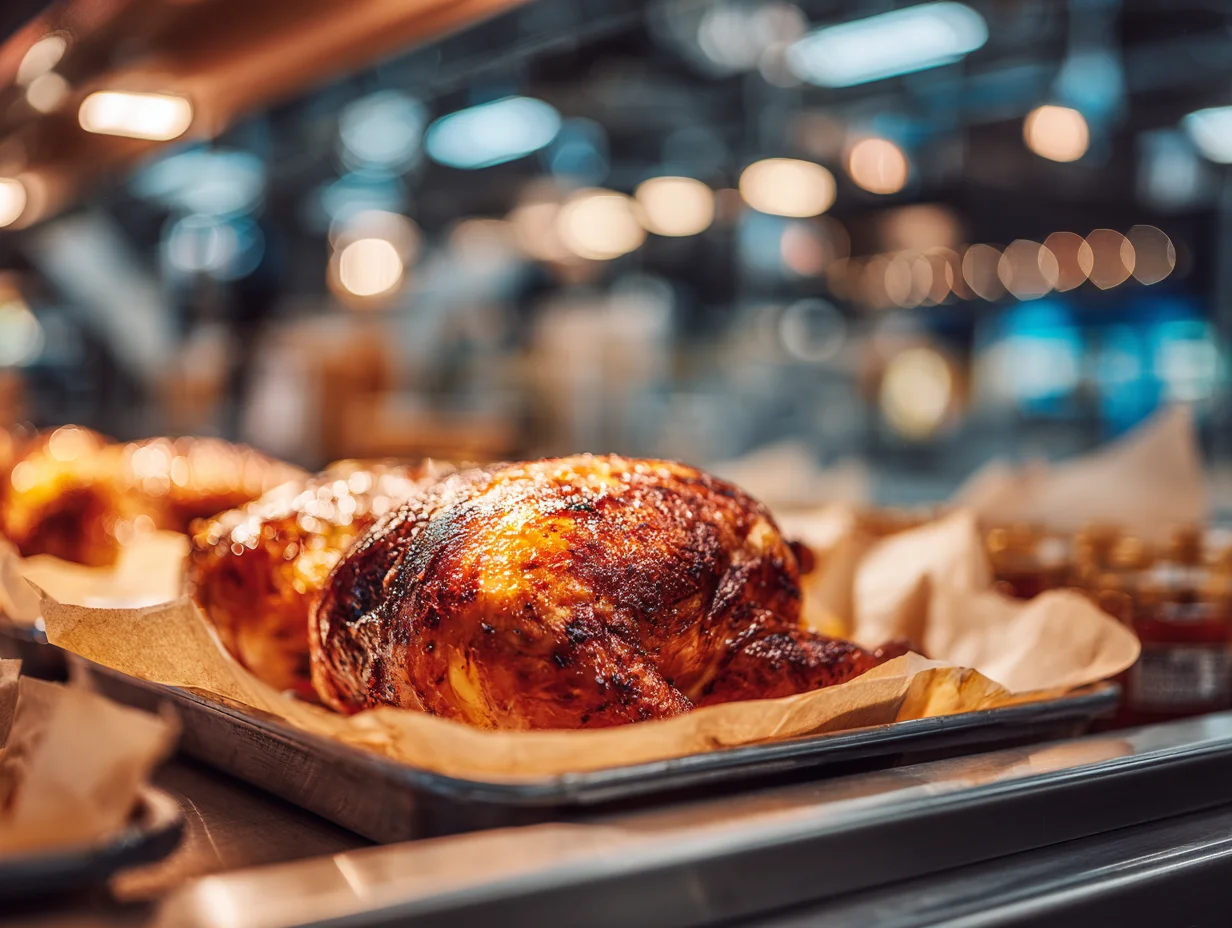
While technically sold from the Costco deli section rather than the food court counter, the $4.99 rotisserie chicken deserves a prominent place in any Costco nutrition guide because millions of members treat it as their go-to prepared meal. At $4.99 for a whole cooked chicken weighing approximately 3 pounds, it is widely regarded as the single best protein value in American retail grocery — and Costco has confirmed they sell it at a loss as a deliberate traffic driver to get members into the store. From a pure nutrition standpoint, the rotisserie chicken excels in almost every category that matters for health-conscious eaters.
A standard 3-ounce serving of Costco rotisserie chicken (a mix of white and dark meat with skin) provides 140 calories, 7 grams of fat, 17 grams of protein, and zero carbohydrates. That means an entire chicken — yielding roughly 12 to 14 servings of 3 ounces each — delivers somewhere between 200 and 240 grams of total protein for under five dollars. To put that in perspective, achieving the same protein quantity from whey protein powder would cost approximately $8–$12, and from a restaurant chicken breast, you’d easily spend $25 or more. The protein-per-dollar efficiency of the Costco rotisserie chicken is essentially unmatched anywhere in the American food landscape.
The primary nutritional caveat is, once again, sodium. Costco’s rotisserie chickens are brined and seasoned before cooking, resulting in approximately 460 mg of sodium per 3-ounce serving. Over the course of eating a significant portion of the chicken, sodium can accumulate rapidly. A half-chicken meal could deliver upwards of 2,500–3,000 mg of sodium depending on how much you consume. For those who are sodium-sensitive or managing hypertension, this is worth monitoring closely.
Removing the skin reduces both the fat and sodium content noticeably — a skinless 3-ounce serving of breast meat drops to roughly 110 calories and 5 grams of fat while maintaining nearly the same protein count. Another practical advantage of the rotisserie chicken is its versatility: you can eat it as-is in the Costco seating area, shred it for salads and wraps throughout the week, or use the carcass for homemade bone broth. For a comprehensive look at every cut and preparation method, visit our rotisserie chicken nutrition guide.
When comparing the rotisserie chicken to other food court proteins, the value gap is enormous. The chicken bake provides 46 grams of protein for $3.99 and 770 calories. The rotisserie chicken provides roughly 200+ grams of protein for $4.99 and approximately 1,680 total calories (whole chicken). If your primary goal at Costco is maximizing protein intake while minimizing cost and unnecessary carbohydrates, the rotisserie chicken is the clear winner — and it isn’t close.
Costco Açaí Bowl — The Healthiest Option?
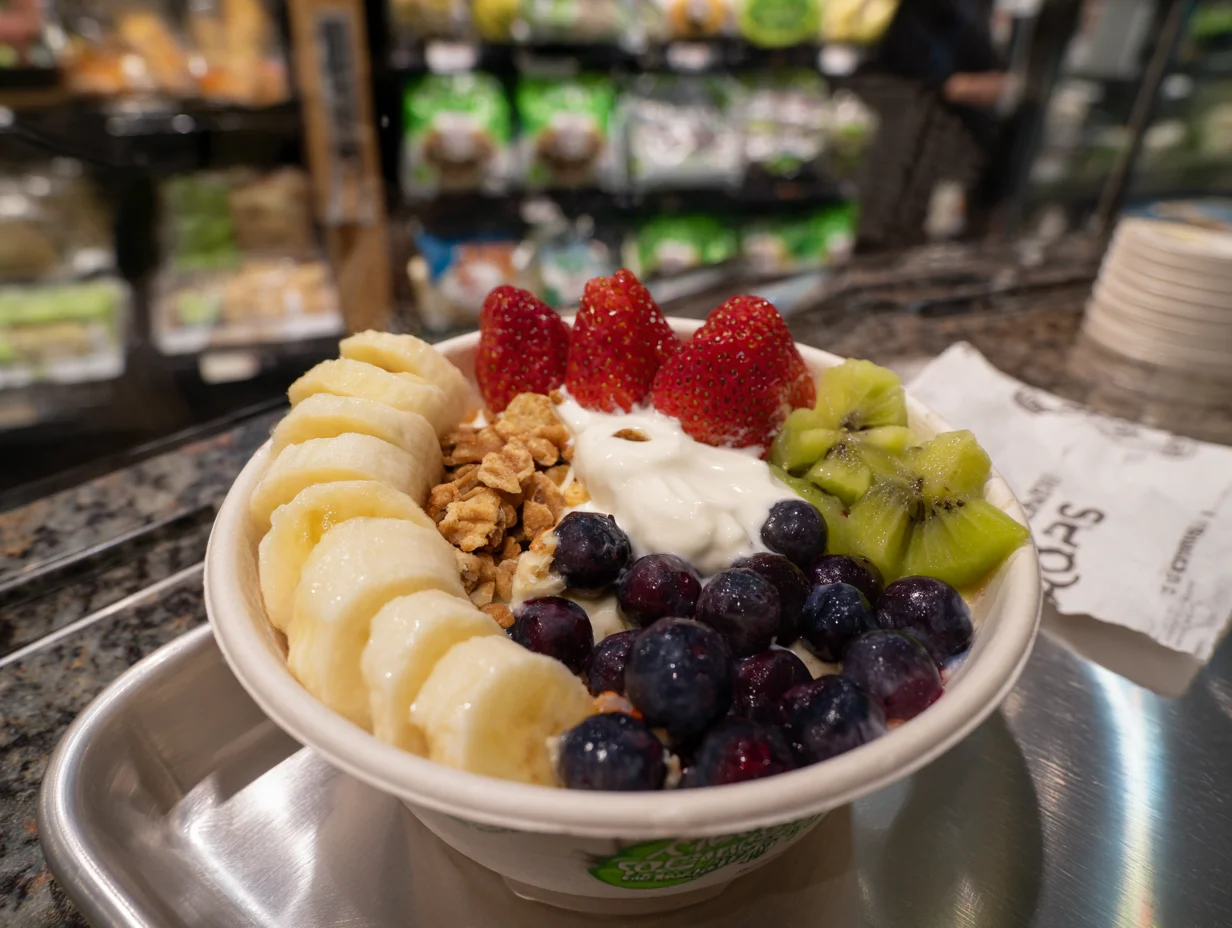
The Costco açaí bowl landed on food court menus in late 2024 and quickly became the go-to pick for shoppers looking for something lighter than a slice of cheese pizza. Served in a generous 14-oz cup, the bowl layers a thick açaí-banana-blueberry blend with a crunchy granola topping and a drizzle of honey. At first glance it looks like a superfood dream, but the nutrition label tells a more nuanced story.
Each bowl contains 340 calories, 4 g protein, 7 g total fat, and 47 g sugar. That sugar count is the headline number. Nearly all of it comes from the blended fruit purée, banana, and honey, which means it is naturally occurring fructose rather than refined sugar — but your body still processes a large dose of simple carbohydrates in one sitting. The fiber content sits around 5 g, which helps slow digestion a bit, and the fat is mostly from the granola clusters.
Is the açaí bowl truly the “healthiest” food court choice? From a calorie standpoint, yes — it is the lowest-calorie entrée-sized item on the 2026 menu. However, its protein-to-sugar ratio is weak compared to, say, a quarter of the rotisserie chicken (250 calories, 38 g protein, 0 g sugar). If your goal is satiety and muscle-protein synthesis, the chicken wins. If your goal is total calorie control and you enjoy the flavor, the açaí bowl is a smart pick — just understand you are essentially eating a fruit-and-granola dessert, not a protein meal.
Pro tip: ask for no honey drizzle to shave roughly 6–8 g sugar off the total. You can read the full Costco açaí bowl calorie breakdown for side-by-side comparisons with every other menu item.
Costco Muffins & Bakery Items
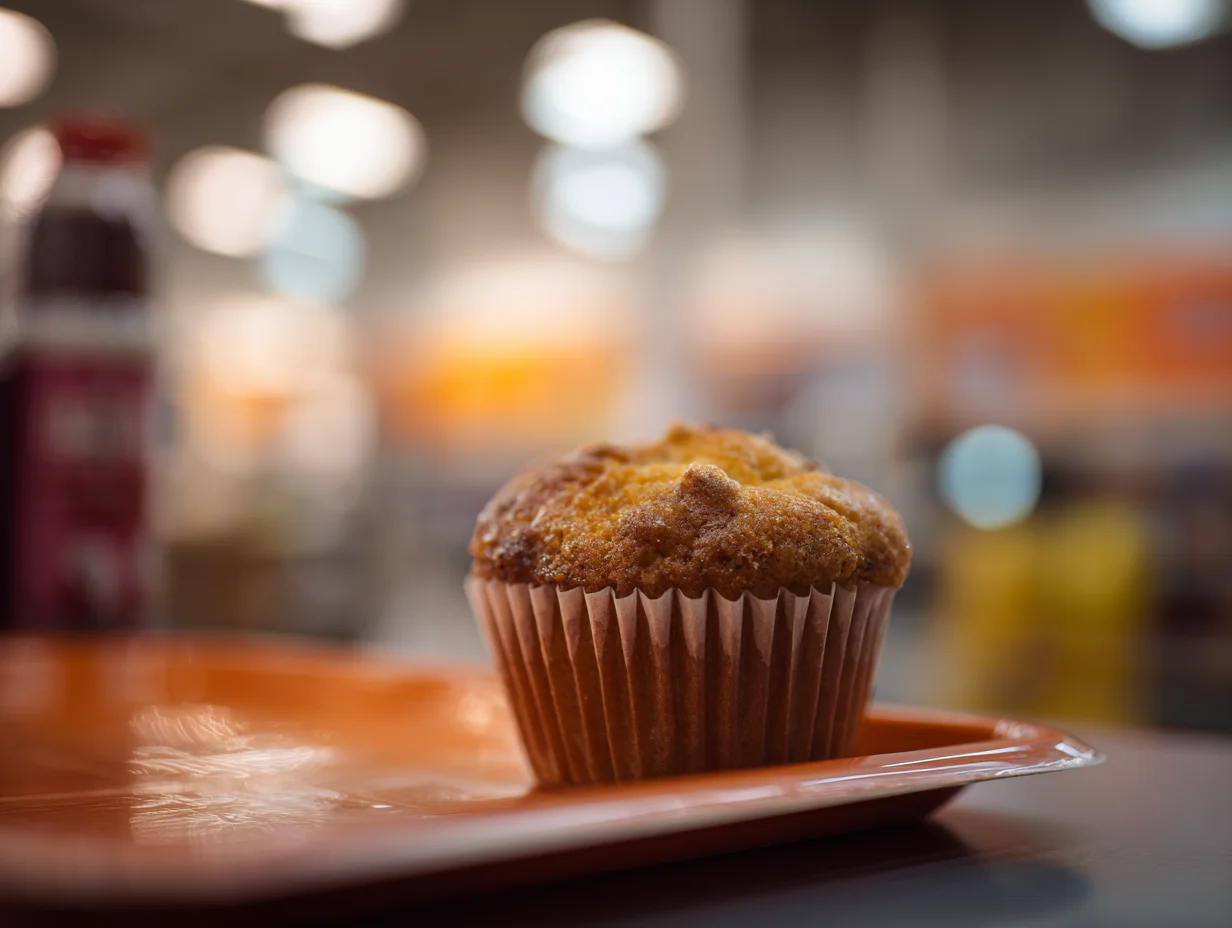
Walk past the food court toward the exit and you will hit Costco’s in-house bakery, where oversized muffins sit in packs of six and routinely end up in shopping carts across the country. These are not ordinary muffins. Each one weighs roughly 175–195 g — about three times the size of a standard coffee-shop muffin — and the calorie load reflects that scale.
The blueberry muffin, Costco’s best seller, contains approximately 690 calories, 36 g fat, 84 g carbohydrates, and 46 g sugar per single muffin. The chocolate chip variety edges even higher at around 700 calories with 38 g fat. Other rotating flavors — including poppyseed, almond poppyseed, and the seasonal banana nut — all land in the 650–720 calorie range. Protein across all varieties hovers between 8–10 g, which is modest given the total calorie investment.
The ingredient list is relatively straightforward: enriched wheat flour, sugar, whole eggs, butter, canola oil, and whichever fruit or mix-in defines the flavor. There are no artificial colors, which Costco phased out of its bakery line several years ago. Still, the macros place a single muffin on par with a full fast-food meal.
A practical strategy is to split one muffin in half and pair half with a protein source like a hard-boiled egg or string cheese. That way you get the indulgent Costco bakery experience at roughly 345 calories instead of nearly 700. For a deeper dive into each flavor, including the seasonal limited-edition varieties and their macros, see our complete muffin calorie guide.
Beyond muffins, the bakery also draws shoppers in with croissants (300 calories each), danishes (450–500 calories), and the famous Costco sheet cake, which clocks in at roughly 350 calories per modest slice. If you are tracking intake, always weigh or portion bakery items at home rather than guessing — the sheer size of Costco baked goods makes eyeball estimates unreliable.
Costco Food Court Prices 2026 — Complete Price List
One of the biggest reasons Costco’s food court has a cult following is the price. While virtually every fast-food chain has pushed prices upward through 2024 and 2025, Costco has held many of its iconic items at the same price point for years — and in some cases, decades. Below is the full 2026 price list alongside changes from two years prior.
| Item | 2026 Price | Change vs 2024 |
|---|---|---|
| Hot Dog & 20-oz Soda Combo | $1.50 | No change |
| Slice of Cheese Pizza | $2.00 | No change |
| Slice of Pepperoni Pizza | $2.00 | No change |
| Whole 18″ Pizza (Cheese or Pepperoni) | $10.99 | +$1.00 |
| Chicken Bake | $3.99 | No change |
| Açaí Bowl | $5.49 | +$0.50 |
| Rotisserie Chicken (3 lb, in-store) | $4.99 | No change |
| 20-oz Soda (standalone) | $0.69 | No change |
| Berry Smoothie (16 oz) | $3.49 | +$0.20 |
| Twisted Churro | $1.99 | +$0.50 |
| Vanilla or Chocolate Soft-Serve (cup) | $1.99 | No change |
| Chocolate-Dipped Ice Cream Bar | $2.49 | New item |
| Mocha Freeze | $2.99 | No change |
The standout is, as always, the $1.50 hot dog and soda combo. Costco’s former CEO Jim Sinegal famously told the current CEO Craig Jelinek, “If you raise the effing hot dog, I will kill you.” That ethos clearly persists into 2026. Adjusted for inflation, that $1.50 price tag in 1985 dollars (when it was introduced) would be well over $4.25 today, which means shoppers are getting more value than ever in real terms.
The few items that did see increases — the whole pizza, açaí bowl, churro, and smoothie — crept up by modest amounts of $0.20–$1.00. Those adjustments reflect supply-chain costs for specialty ingredients like açaí purée and cocoa, rather than a broad pricing strategy shift. Overall, the Costco food court remains arguably the best dollar-for-calorie value in American quick-service dining.
Membership is technically required to order at most locations, though enforcement varies. A Costco Gold Star membership costs $65 per year in 2026. If you visit the food court just twice a month and order a hot dog combo each time, your annual food court spend is $36 — making the membership effectively pay for itself in savings compared to any fast-food chain combo meal averaging $9–$12. For historical price tracking going back to 2015, visit our full price list with history.
How to Build a Healthy Costco Food Court Meal
Eating at the Costco food court does not have to derail your nutrition goals. The key is strategic combining: pair a moderate-calorie entrée with a low-calorie drink and, if needed, share or halve oversized items. Below are four meal combos that keep you under 600 calories while delivering solid protein.
| Combo Name | Items | Total Calories | Protein | Estimated Price |
|---|---|---|---|---|
| The Classic Light | Hot dog (no bun) + diet soda | 370 | 15 g | $1.50 |
| Açaí & Protein | Açaí bowl + side of rotisserie chicken breast (4 oz, brought from deli) | 480 | 30 g | ~$6.50 |
| Half-Slice Saver | ½ slice cheese pizza + side salad (brought from home or deli) + water | 350 | 18 g | ~$2.00 |
| Chicken Power Bowl | ¼ rotisserie chicken (breast + wing) + diet soda | 250 | 38 g | ~$1.95 |
Low-Calorie Strategy #1: Skip the bun. Removing the hot dog bun saves roughly 150 calories and 28 g carbs. Ask for a fork or wrap the hot dog in a napkin. You still get the snap-casing all-beef flavor without the refined-flour vehicle.
Low-Calorie Strategy #2: Choose water or diet soda. The included 20-oz fountain soda adds 0 calories if you pick a diet option or water from the same machine. Choosing regular Pepsi adds roughly 250 calories of pure sugar — more than half an açaí bowl.
Low-Calorie Strategy #3: Share the pizza. A single slice of cheese pizza is 700 calories. Splitting it with a shopping partner drops that to 350 calories per person, which is completely reasonable for a meal and still satisfying given the thick, doughy crust.
Low-Calorie Strategy #4: Treat the food court as a protein stop. The rotisserie chicken is sold inside the warehouse, not at the food court window, but many shoppers crack it open in the seating area. A quarter of the bird — breast and wing — gives you 250 calories and 38 g protein for roughly $1.25 of a $4.99 chicken. That is one of the best protein-per-dollar ratios available anywhere in 2026.
Low-Calorie Strategy #5: Avoid the dessert trap. After a satisfying entrée, the churro or soft-serve line is tempting. If you must indulge, the soft-serve cup at 260 calories is a better choice than the churro at 490 calories. Better yet, save dessert for a planned treat day and walk out after your main meal.
Costco Food Court Allergen Guide
Navigating food allergies at any quick-service counter requires vigilance, and the Costco food court is no exception. Because menu items are prepared in a shared kitchen environment, cross-contact is always a possibility. That said, understanding which allergens are present in each core item helps you make safer choices.
Wheat/Gluten: Present in the hot dog bun, pizza dough, chicken bake tortilla, churro, muffins, and the granola topping on the açaí bowl. The only food court items generally free of wheat are the bunless hot dog, the soft-serve ice cream, and the rotisserie chicken.
Dairy: Found in the pizza cheese, chicken bake (Caesar dressing and cheese), muffins (butter), soft-serve, and the mocha freeze. The hot dog itself is dairy-free, though the bun may contain milk derivatives depending on the supplier. The açaí bowl blend is dairy-free, but always confirm at your location.
Soy: Soybean oil and soy lecithin appear in the hot dog bun, pizza dough, chicken bake tortilla, and most bakery items. The hot dog frank itself may contain soy protein isolate — check the posted ingredient list at your warehouse.
Eggs: Present in the muffins, chicken bake filling, and certain bakery desserts. The pizza, hot dog, açaí bowl, and soft-serve are typically egg-free, but formulations can vary by region.
Tree Nuts & Peanuts: The açaí bowl granola may contain or be processed alongside tree nuts. Muffin flavors like almond poppyseed obviously contain almonds. Other core food court items are generally nut-free, but cross-contact in the bakery is a realistic concern.
Tips for allergy-conscious shoppers:
1. Check the posted ingredient boards. Every Costco food court is required to display full ingredient and allergen information. These boards are usually mounted near the ordering counter or on the condiment stand.
2. Ask the food court staff directly. Employees can pull up ingredient spec sheets that go beyond what is on the public board. Do not rely solely on the digital menu screen.
3. Stick to single-ingredient items when in doubt. The rotisserie chicken (ingredients: chicken, salt, sodium phosphate, modified food starch, sugar, dextrose) and the bunless hot dog are the simplest items on the menu and carry the fewest allergen risks.
4. Be cautious with seasonal and regional items. Limited-time offerings like specialty pizzas or seasonal drinks may introduce allergens not found in the core menu. Always re-check when you see a new item.
Costco Food Court vs Fast Food Chains
How does the Costco food court stack up against mainstream fast-food chains in 2026? Let us compare three popular meals across Costco, McDonald’s, and Chick-fil-A on the metrics that matter most: price, calories, and protein.
Value comparison — the “combo meal” test: A Costco hot dog and soda combo costs $1.50 and delivers 570 calories and 20 g protein (with the bun). A McDonald’s McDouble, small fries, and small Coke runs approximately $7.49 in 2026 and provides around 840 calories and 25 g protein. A Chick-fil-A original chicken sandwich combo with medium fries and a medium lemonade costs roughly $11.29 and totals about 1,040 calories and 33 g protein.
On a pure cost-per-calorie basis, Costco dominates: you pay roughly $0.0026 per calorie with the hot dog combo, versus $0.0089 at McDonald’s and $0.0109 at Chick-fil-A. Put another way, you could buy five Costco hot dog combos for the price of one Chick-fil-A sandwich combo — and still have change left over.
On a cost-per-gram-of-protein basis, the picture is even more dramatic. Costco’s hot dog combo delivers protein at about $0.075 per gram. McDonald’s McDouble combo comes in at $0.30 per gram, and Chick-fil-A sits at $0.34 per gram. If you swap to the Costco rotisserie chicken — $4.99 for roughly 150 g of protein across the entire bird — you are looking at an almost unbeatable $0.033 per gram of protein.
Calorie density and health nuance: While Costco wins on value, it is worth noting that the food court menu lacks variety in vegetables and fiber. McDonald’s at least offers side salads and apple slices in some markets, and Chick-fil-A has a grilled nuggets option with a kale-based side salad at roughly 400 calories total. Costco’s açaí bowl is the lone plant-forward item, and even it is better described as a fruit-sugar vehicle than a balanced meal.
Convenience gap: The biggest trade-off is access. McDonald’s and Chick-fil-A have drive-throughs, mobile ordering, and thousands more locations. Costco requires a warehouse trip and a membership card. For shoppers already heading to Costco, though, the food court is an unmatched pit stop — fast, remarkably cheap, and consistently portioned from location to location.
Bottom line: If your priority is stretching every dollar while still hitting reasonable macros, Costco’s food court is in a league of its own in 2026. Pair smart ordering strategies — bunless dogs, rotisserie chicken, diet drinks — with the warehouse’s rock-bottom prices and you have a quick-service meal plan that no mainstream fast-food chain can match on value.
Frequently Asked Questions
How many calories are in a Costco hot dog combo?
The Costco quarter-pound all-beef hot dog combo, which includes a 20 oz fountain drink, contains 470 calories and 20g of protein. At just $1.50, it remains one of the best calorie-per-dollar values in fast food. The combo has held the same price since 1985, making it an iconic Costco staple.
What is the healthiest item at Costco food court?
The Açaí Bowl is the healthiest option on the 2026 Costco food court menu at just 340 calories, with 7g of protein and 4.5g of fat. It features a generous portion of blended açaí topped with granola and fresh fruit. This is one of the few items on the menu that stays well under 400 calories while delivering solid nutritional value.
How much does Costco pizza cost in 2026?
A single slice of Costco food court pizza costs $1.99 in 2026, while a whole 18-inch pizza is priced at $9.99. Available in cheese and pepperoni varieties, each slice delivers approximately 600–710 calories. Buying the whole pie gives you the equivalent of 8 slices, making it significantly cheaper per serving than most pizzerias.
Is the Costco chicken bake healthy?
The Costco Chicken Bake packs 770 calories, 46g of protein, and 25g of fat, making it one of the most protein-dense items on the menu. However, it also contains approximately 1,500 mg of sodium, which is roughly 65% of the recommended daily intake. It works well as a high-protein post-workout meal, but the sodium content makes it a less ideal choice for everyday consumption.
How many calories are in a Costco muffin?
Costco bakery muffins average around 690 calories each, with some varieties like the Double Chocolate reaching up to 750 calories. Each muffin also contains approximately 36g of fat and 70–80g of sugar. Splitting a single muffin in half brings the count down to a more reasonable 345 calories, which is a practical strategy for portion control.
Does Costco food court have low-calorie options?
Yes, the 2026 Costco food court menu includes several items under 400 calories, including the Açaí Bowl at 340 calories and the Berry Sundae at approximately 380 calories. The hot dog without the bun also drops to roughly 370 calories while retaining 20g of protein. These options make it possible to enjoy the food court without exceeding a typical meal calorie budget.
How much protein is in Costco rotisserie chicken?
A standard 3 oz serving of Costco rotisserie chicken provides approximately 17g of protein and just 140 calories. A whole 3 lb rotisserie chicken priced at $4.99 yields roughly 12 servings, delivering an estimated 204g of total protein. This makes it one of the most affordable protein sources available at any grocery retailer in 2026.
Are Costco food court prices going up in 2026?
Costco food court prices have remained mostly stable heading into 2026, with the hot dog combo holding firm at $1.50 and whole pizzas at $9.99. Minor adjustments have been seen on newer menu additions like the Açaí Bowl at $4.99, reflecting ingredient costs. Overall, Costco continues to operate its food court at near break-even to drive membership loyalty rather than profit.
What allergens are in Costco food court items?
The most common allergens across Costco food court items include wheat, dairy, soy, and eggs, which are present in the pizza, chicken bake, and baked goods. The hot dog and its bun contain wheat and soy, while the ice cream and Berry Sundae contain dairy. Costco provides detailed ingredient and allergen information on-site and recommends consulting staff if you have specific concerns.
How does Costco food court compare to McDonald’s nutritionally?
Costco’s food court generally offers better value per calorie than McDonald’s, with the hot dog combo delivering 470 calories for $1.50 compared to a McDonald’s Big Mac Meal at roughly 1,080 calories for $9–$11. Costco’s pizza slice also provides approximately 700 calories for $1.99, undercutting most comparable fast food options. While neither menu is designed for low-calorie eating, Costco’s price-to-portion ratio is significantly more favorable.

Founder & Head Chef at Optimal Recipes
Patricia has created and tested over 1,000 recipes and specializes in making nutrition data accessible for home cooks. Updated March 2026.
- Costco Wholesale — Official Food Court Menu & Nutrition Data (2026)
- USDA FoodData Central — Nutritional Reference Values
- American Heart Association — Daily Calorie & Sodium Guidelines
- FDA — Allergen Labeling Requirements (2025 Update)
- Costco Connection Magazine — Food Court Feature (Jan 2026)